Your Payment History Is a Diary You Didn't Know You Were Writing
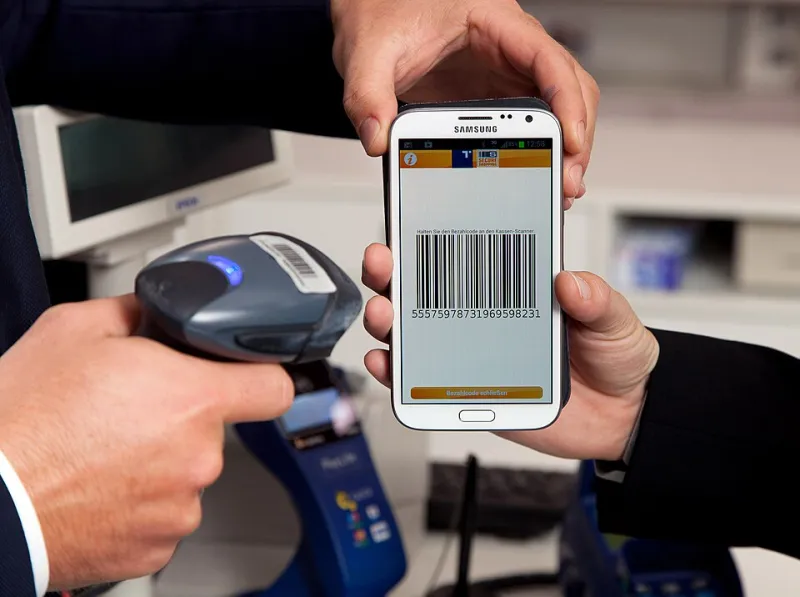
Photo: Richard Tanzer Fotografie / VeroPay, CC BY-SA 3.0, via Wikimedia Commons
Here is the uncomfortable thesis of this piece: most providers spend enormous energy protecting their identity online while handing a complete transactional diary to companies that index, retain, and — when convenient — share it. The peer-to-peer payment apps sitting on your phone are, functionally, surveillance systems with a friendly interface. And the industry's collective habit of using them anyway is the single largest self-inflicted privacy leak I can name.
What These Apps Actually Know
Consider what a mainstream P2P platform holds when you use it casually: your legal name, your linked bank account, the identity of everyone you've ever transacted with, transaction amounts, timestamps, and — critically — the memo fields, usernames, and profile photos attached to those transactions.
Now layer on the failure modes that have played out repeatedly in the United States. Platforms have surfaced public transaction feeds where memo fields like "escort services" or even emojis have exposed users to employers, family members, and data brokers. Companies have shared transaction data with third-party analytics firms. Law enforcement subpoenas — which require no warrant for many records held by financial-adjacent companies — have swept up years of P2P history in investigations only tangentially related to the original account holder.
Your payment app is not a neutral pipe. It is a database, and databases have business models.
The Banking Layer Is Quieter and Worse
The app gets the attention, but the linked bank account is where exposure compounds. A checking account statement that shows recurring P2P transfers from dozens of individuals, in patterns inconsistent with any ordinary business, tells a story to anyone who reads it: a mortgage underwriter, a landlord's screening service, an opposing attorney, a bank's own fraud algorithms.
Banks in the US are required to file suspicious activity reports under the Bank Secrecy Act, and the triggers for those reports are pattern-based, not evidence-based. A flood of small incoming transfers is exactly the kind of pattern that generates automated flags. This isn't a reason for panic — it is a reason for intentionality. A provider whose financial life looks like everyone else's is, in privacy terms, invisible. One whose financial life looks like a ledger is a story waiting to be read.
Building a Privacy-First Financial Stack
The goal is not deception — it is compartmentalization. These are the habits worth adopting from day one:
Separate the identity. Your professional financial life should run through accounts, usernames, and contact details that do not contain your legal name and do not link to your personal accounts. Assume any shared email, shared phone number, or shared device is a bridge between compartments.
Kill the memo field. If you must use a P2P platform, the memo stays blank. Always. So do emojis, inside jokes, and helpful descriptions. Assume every memo field is public, forever, because functionally it can be.
Diversify the flow. Do not funnel every transaction through one recognizable channel. A mix of approaches — cash for a meaningful share of in-person work, plus platforms that minimize data retention — produces a financial pattern that reads as noise rather than signal.
Understand what you're agreeing to. Every platform's terms disclose data-sharing practices, in the sense that a flood discloses water. Read the privacy policy of any financial tool you use and note specifically: what is shared with third parties, how long records are retained, and what triggers disclosure to authorities.
Plan for the tax reality. Privacy and illegality are different conversations. Income is income in the United States, and a clean, legal tax posture is itself a privacy asset — it removes the leverage that financial irregularity hands to anyone who ever gains access to your records. Compartmentalization protects your identity; it should never be confused with hiding income.
The Habit That Matters Most
The deepest problem isn't any single app. It's the default. Most people choose payment methods on convenience alone, then retrofit privacy concerns after a scare. Reverse that order. Decide what you are and aren't willing to have on record, then choose tools that match the decision.
Convenience is the currency these platforms trade in, and it's real. But in this line of work, the cheapest thing you can buy with a little inconvenience is a financial footprint that says nothing about you at all. That trade is worth making every single day.